About Yewa
Discover the rich history and culture of the Yewa people
Who Are the Yewa People?
The Yewa people, formerly known as Egbado, are a sub-ethnic group of the Yoruba people traditionally inhabiting the western area of Ogun State, Nigeria. The renaming to "Yewa" in 1995 was inspired by the Yewa River, which flows through the land, symbolizing a unifying identity for the diverse communities in the region.
Our History
The history of the Yewa people dates back to migrations between the 14th and 18th centuries from Ile-Ife, Oyo, and Ketu. These early settlers established communities along strategic trade routes to the coast. In the 18th and 19th centuries, further migrations occurred due to regional conflicts, leading to the formation of independent kingdoms and chiefdoms that make up modern Yewaland.
Originally known as Egbado, the people officially adopted the name "Yewa" in 1995 to assert a distinct identity separate from historical affiliations and to foster greater unity among the various groups in the region.
Location & Geography
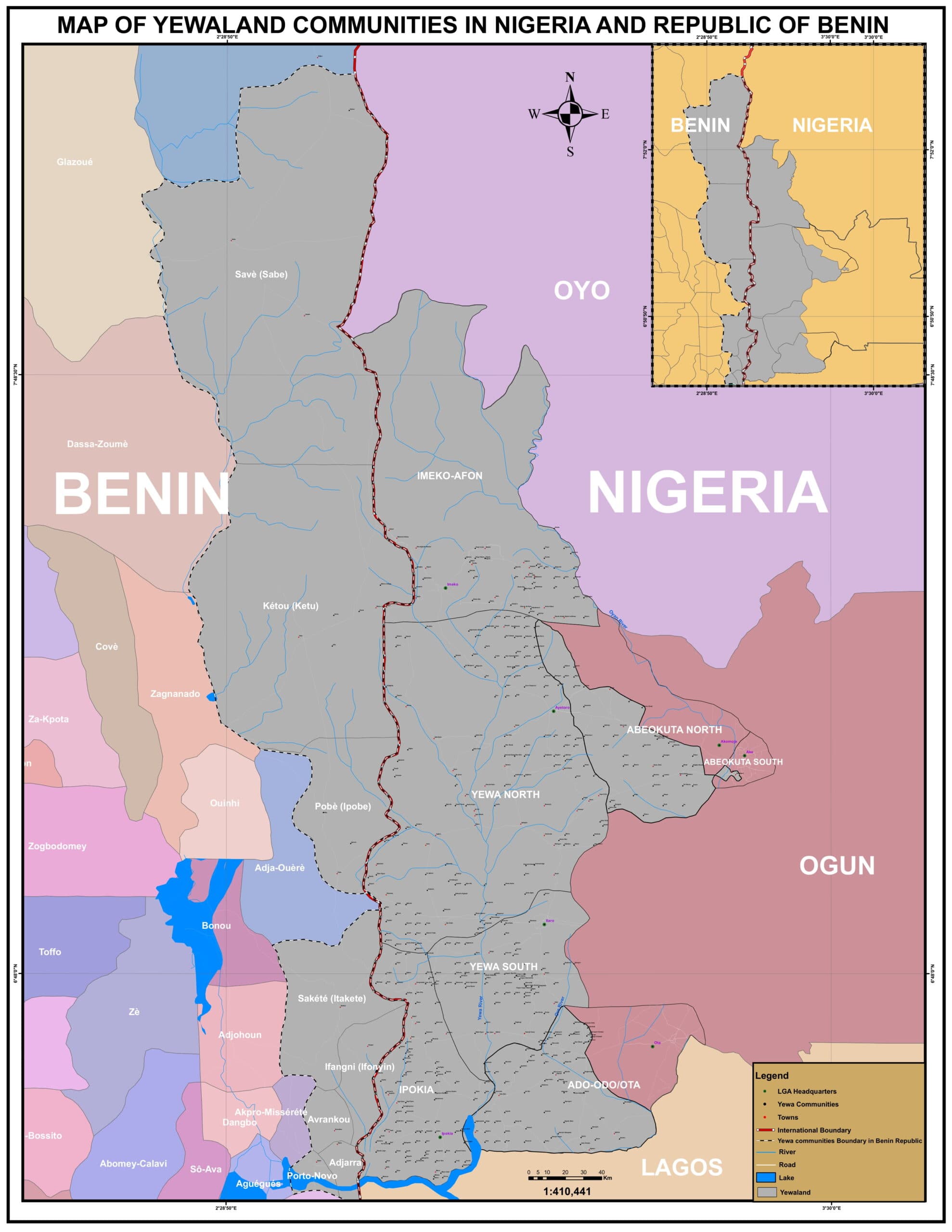
Yewaland is situated in the western part of Ogun State with extension into Benin Republic, bordering Lagos State to the south, Oyo State to the north, and the Republic of Benin to the west. This strategic location facilitates significant cross-border trade and cultural exchange.
The region encompasses several Local Government Areas including Yewa South, Yewa North, Imeko Afon, and Ipokia.
Culture & Traditions
Arts & Lifestyle
Yewa culture is vibrant and diverse, characterized by rich traditions in music, dance, and art. The region is famous for its textile production, particularly unique fabrics used for ceremonial attire. Traditional music styles like Bolojo and Agasa are widely enjoyed.
Faith & Festivals
Festivals play a central role in community life, such as the Oronna Festival, which honors the legendary warrior Oronna. The Yewa people also maintain strong traditional worship practices, revering deities such as the Yewa River goddess, while also embracing modern faiths.
Yewa Anthem